The MG 34: The First General Purpose Machine Gun
The MG 34 is widely treated as the first general purpose machine gun adopted into service because one weapon served light, medium, air defense and vehicle roles. Its complex construction made it capable and influential, but it was difficult to manufacture in wartime quantities, and later designs addressed that production problem.
By RaiS. Reviewed by RaiS. Published . 6 min read.
Research and drafting were assisted by AI. RaiS checked the facts against the sources below and approved this page.
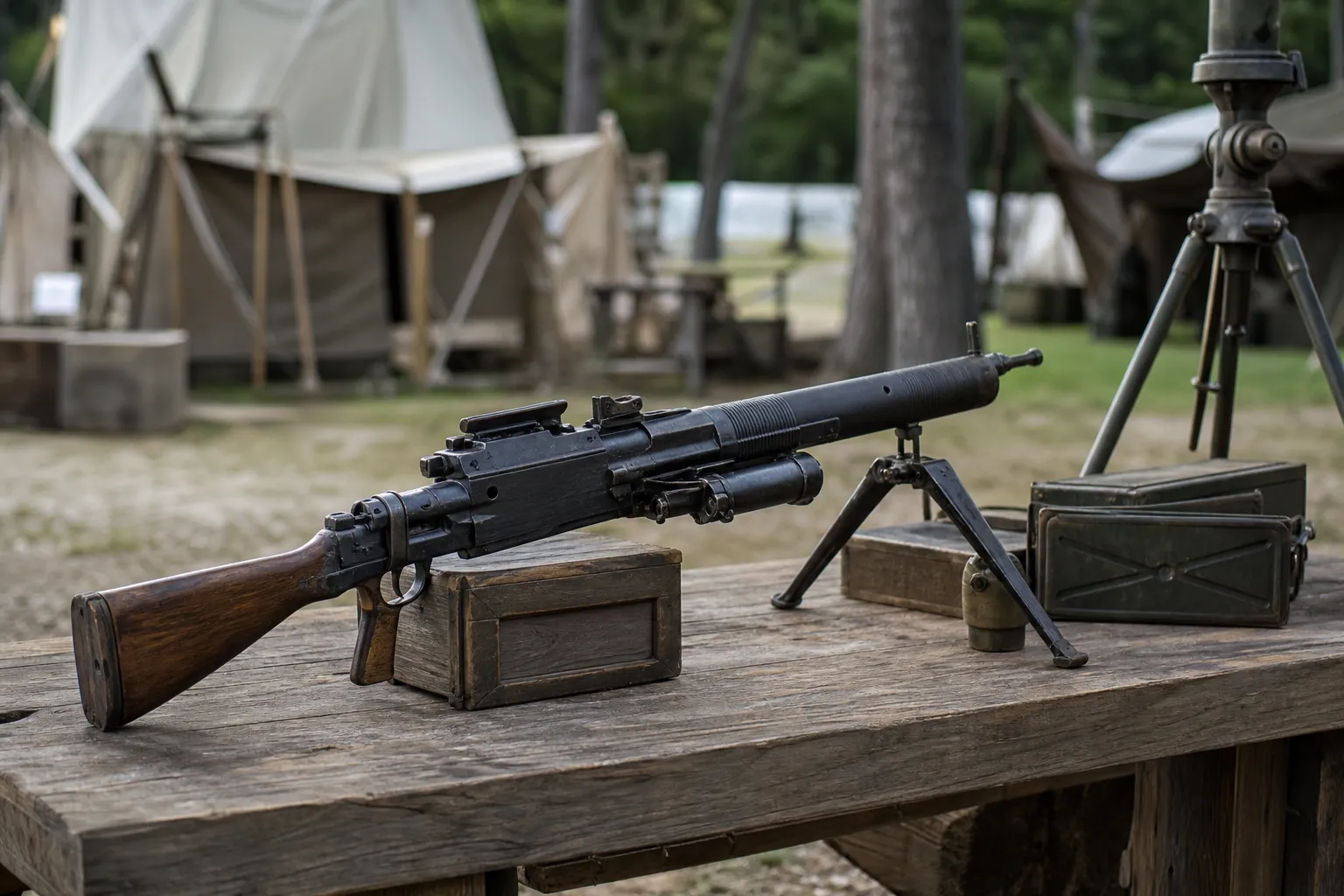
The MG 34 was a German machine gun of the 1930s that put the “one gun, many roles” idea into service. It was recoil operated and air cooled, and it could be used from a bipod, tripod, antiaircraft mount or vehicle installation, which is why it is commonly described as the first general purpose machine gun adopted into service.
What made the MG 34 different
Before the MG 34, armies often separated machine gun roles more sharply. The important idea behind the MG 34 was not just that it fired automatically. It was that one basic gun could fill several battlefield roles by changing how it was mounted and fed.
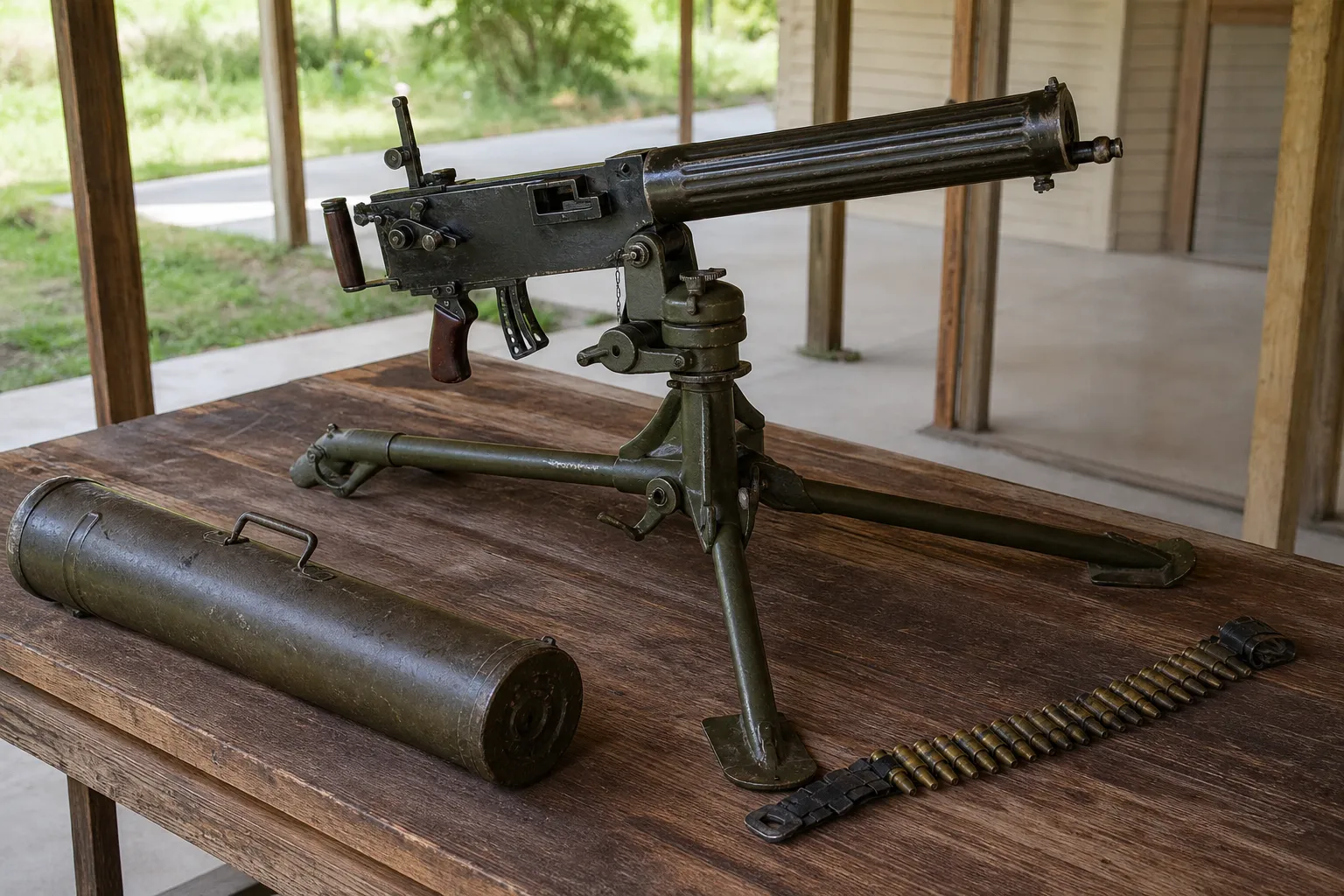
The U.S. War Department’s 1943 manual identified it as the “German 7.9 mm Dual Purpose Machine Gun MG34” and stated that it could be used on a bipod, an antiaircraft tripod or a tripod mount. The Deutsches Historisches Museum states that, on a special tripod, the MG 34 could support attacking infantry at longer distances or be used for air defense.
The Culture.ru Victory Museum entry states the point even more directly: the MG 34 was the first general purpose machine gun adopted into service. It describes the universal machine gun idea as one weapon serving as a bipod mounted light machine gun, a medium machine gun, an antiaircraft tripod gun and a vehicle gun. The same entry states that the MG 34 could be installed on tanks and armored vehicles in single or multiple gun arrangements.
That flexibility is the heart of the “general purpose machine gun” label. In the light role, the gun could move with infantry on a bipod. In the sustained fire role, it could be placed on a tripod. In air defense or vehicle use, the same basic weapon could be adapted to another mounting role.
Development in the early 1930s
The Deutsches Historisches Museum states that the MG 34 was developed in the early 1930s, used 7.92 mm ammunition and entered production in 1934 at Rheinmetall.
The Deutsches Historisches Museum states that the gun was adopted into the standard equipment of German infantry in January 1939 as the “Universalmodell 34.” It also states that the MG 34 was first used on a large scale during Germany’s 1939 invasion of Poland.
Production and service continued on a large scale. The Deutsches Historisches Museum gives total Wehrmacht production as more than 400,000 MG 34s.
Why it is called a general purpose machine gun
The MG 34’s reputation comes from its role flexibility. The Culture.ru Victory Museum entry calls it a general purpose machine gun. The U.S. War Department’s 1943 manual emphasizes the same idea in practical terms by listing the bipod, antiaircraft tripod and tripod mount.
The basic categories were:
Light machine gun role: The U.S. War Department stated that the MG 34 could be used on a bipod.
Medium machine gun role: The U.S. War Department stated that it could be used on a tripod mount.
Antiaircraft role: The U.S. War Department listed an antiaircraft tripod, and the Deutsches Historisches Museum states that a special tripod allowed air defense use.
Vehicle role: The Culture.ru Victory Museum entry states that the MG 34 could be installed on tanks and armored vehicles.
This did not make the MG 34 simple. It made it adaptable. The same gun was expected to serve in roles that had often required different weapons, mounts or handling methods.
Operation and feed, at a conceptual level
The U.S. War Department’s 1943 manual describes the MG 34 as recoil operated and air cooled, capable of single or full automatic fire.
In this context, “recoil operated” is the operating category used by those references. “Air cooled” means the design did not rely on a water jacket, a contrast that matters in machine gun history because earlier sustained fire machine guns often used heavier cooling arrangements.
For feed, the U.S. War Department stated that the MG 34 was normally fed from 50 round flexible metal belts that could be joined end to end.
The gun also had drum options for mobility and special roles. The Deutsches Historisches Museum states that the MG 34 was fed by belt or double drum.
The cyclic rate was high by the figures given in contemporary and museum references. The U.S. War Department listed the cyclic rate as 800 to 900 rounds per minute. The Deutsches Historisches Museum states that the MG 34 had a firing speed of 900 rounds per minute.
Machined construction: strength and production burden
The MG 34 was not a simple wartime expedient.
The Deutsches Historisches Museum points to the drawback of complexity. It states that the MG 34’s many precision parts made it comparatively prone to malfunction. The Culture.ru Victory Museum entry states that the trigger mechanism was complicated and that barrel overheating slowed production, leading to the MG 42, adopted in 1942.
For a military that needed large numbers of automatic weapons, this mattered. A gun could be tactically impressive and still be difficult to manufacture in wartime quantities. The MG 34’s general purpose concept survived, but its production method became a problem that later designs tried to solve.
How the MG 34 led to the MG 42
The MG 42 was not a rejection of the general purpose machine gun idea. It was a manufacturing answer to the MG 34’s cost and complexity.
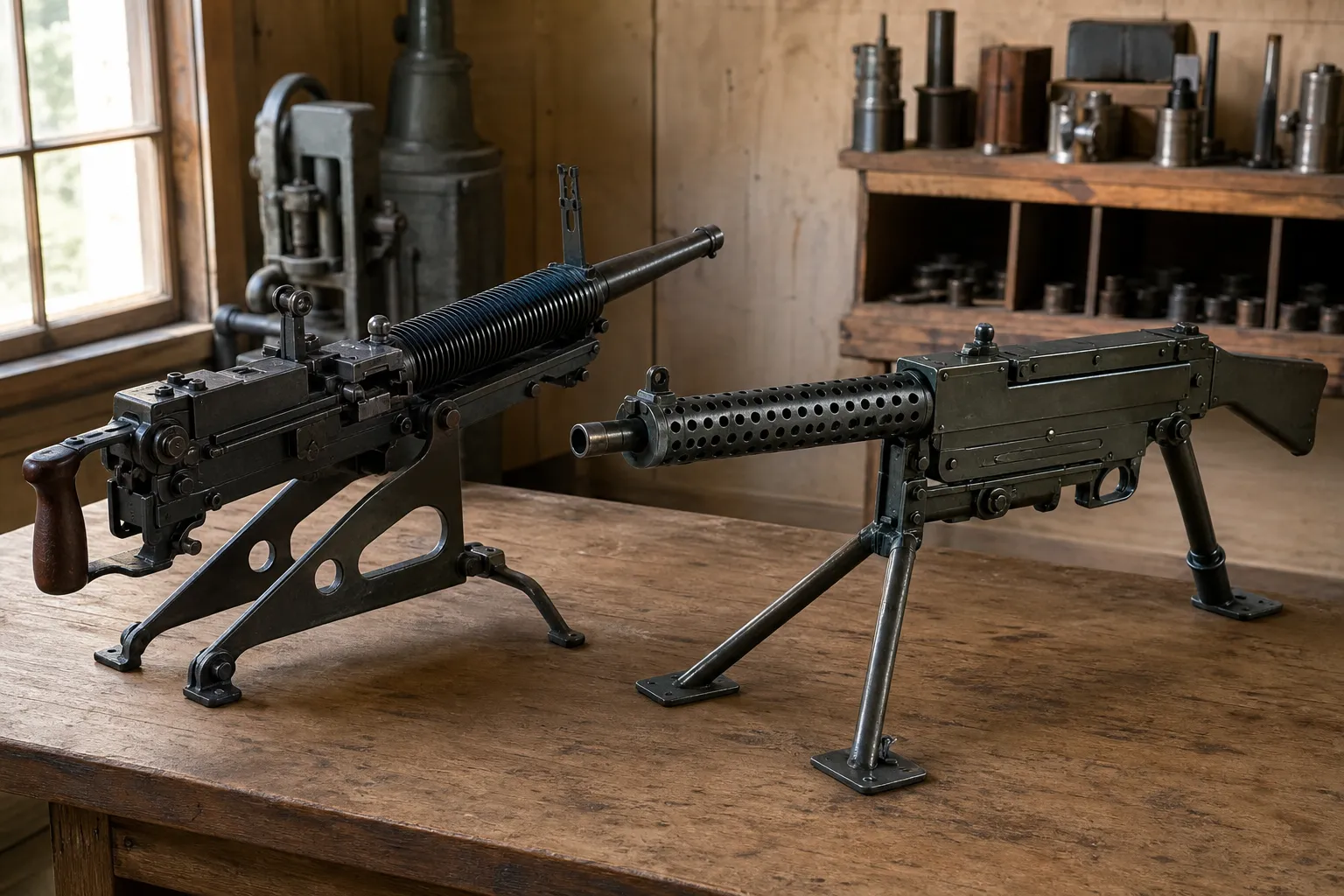
The Deutsches Historisches Museum states that the MG 42 took the MG 34’s place during World War II.
The Royal Armouries explains the production shift clearly. It states that the MG 42 was manufactured by forming shapes from sheets of steel under extreme pressure. It also states that production workers needed training on specific machines for specific components rather than the skills to make the whole gun, which sped the process.
The manufacturing time comparison is stark. The Royal Armouries states that the MG 42 took 75 hours to make, compared with 150 hours for the MG 34. That figure explains why the MG 34’s influence is tied so closely to the MG 42: the MG 34 proved the role concept, while the MG 42 addressed the production problem.
Legacy of the MG 34
The MG 34’s place in firearms history rests on two linked facts. First, references from museums and military manuals describe it as a general purpose or dual purpose machine gun that could serve from multiple mounts and feed arrangements. Second, the same references show why its design was hard to sustain in wartime production.
The gun’s service record was broad. The Deutsches Historisches Museum states that more than 400,000 were produced for the Wehrmacht.
Its longer historical importance is conceptual. The MG 34 showed that a single machine gun could be organized around several battlefield roles: bipod light machine gun, tripod mounted medium gun, antiaircraft gun and vehicle gun. That is the reason it is remembered as the first general purpose machine gun adopted into service.
U.S. legal note for modern readers
For U.S. readers, the legal category matters. Federal law defines “machinegun” for NFA purposes as a weapon that shoots, is designed to shoot or can be restored to shoot automatically more than one shot, without manual reloading, by a single trigger function.
This article is historical and technical background only. Anyone researching ownership, transfer, importation, display or museum handling should confirm the current law and agency guidance with the ATF and the current U.S. Code text.
Frequently asked questions
Why is the MG 34 called the first general purpose machine gun?
The Culture.ru Victory Museum entry states that the MG 34 was the first general purpose machine gun adopted into service. References describe it serving from a bipod, tripod, antiaircraft tripod and vehicle installations, which is the core of the general purpose concept.
When was the MG 34 developed and adopted?
The Deutsches Historisches Museum states that the MG 34 was developed in the early 1930s and entered production in 1934 at Rheinmetall. It states that the gun entered the standard equipment of German infantry in January 1939 as the “Universalmodell 34.”
How was the MG 34 fed?
The U.S. War Department’s 1943 manual states that the MG 34 was normally fed from 50 round flexible metal belts that could be joined end to end. The Deutsches Historisches Museum states that it was fed by belt or double drum.
Was the MG 34 recoil operated?
Yes. The U.S. War Department’s 1943 manual describes the MG 34 as recoil operated and air cooled.
Why did Germany move toward the MG 42?
The MG 42 offered a simpler production approach. The Royal Armouries states that the MG 42 took 75 hours to make compared with 150 hours for the MG 34. The Deutsches Historisches Museum points to the MG 34’s many precision parts, and the Culture.ru Victory Museum entry links production difficulty to the MG 42.
Sources
- Das MG 34, Deutsches Historisches Museum, LeMOOfficial source. Accessed November 9, 2026.
- Universal-Maschinengewehr Modell 34 (MG 34), 1934/1945, Deutsches Historisches Museum, LeMOOfficial source. Accessed November 9, 2026.
- TM E9-206A, German 7.9-mm Dual Purpose Machine Gun MG34, 13 April 1943, U.S. War Department, hosted copy. Accessed November 9, 2026.
- M.G. 34, German Infantry Weapons, Military Intelligence Service Special Series No. 14, 25 May 1943, U.S. Military Intelligence Service, hosted copy at LoneSentry. Accessed November 9, 2026.
- German MG34 Machine Gun, Naval History and Heritage CommandOfficial source. Accessed November 9, 2026.
- Machine gun MG 34, Culture.ru, Ministry of Culture of the Russian Federation, Victory Museum entryOfficial source. Accessed November 9, 2026.
- MG42 Machine Gun (PR.13309), Royal ArmouriesOfficial source. Accessed November 9, 2026.
- MG42 Machine Gun, NRA National Firearms Museum. Accessed November 9, 2026.
- 26 U.S.C. § 5845, Definitions, Office of the Law Revision Counsel, U.S. House of RepresentativesOfficial source. Accessed November 9, 2026.
- National Firearms Act Handbook, Bureau of Alcohol, Tobacco, Firearms and ExplosivesOfficial source. Accessed November 9, 2026.
- WarDepartment technical Manual tm e9 206a german 7 9 Mm Dual Purpose Machine Gun Mg 34 13 April 1943 (PDF). Accessed November 9, 2026.